
Full Coverage Decisions for Retirees — Waukegan, IL
Free to compare
When the Lien Drops and the Premium Doesn't
You made the final payment. The title arrived. Your mileage dropped to grocery runs, medical appointments, and visiting family. Yet your renewal notice shows the same collision and comprehensive premiums you paid when you drove 15,000 miles a year and owed the bank. You're now asking the question lenders never let you ask: does full coverage still make sense?
This article walks the specific position of a Waukegan retiree with a paid-off vehicle of moderate age, low annual mileage, and a premium structure built for a commuter who no longer exists. Illinois law requires insurers to offer a mature-driver discount, but the law sets no floor percentage, so the amount varies by carrier filing. The decision is yours to control, and it hinges on vehicle value, your driving pattern, and whether your current carrier applies the discounts you now qualify for.
“Collision becomes optional once the lien drops and the vehicle's value falls below twice the annual premium.”

See What Illinois Retirees Pay Now
Get My Illinois Retiree Auto Insurance Quote$25,000
Illinois Bodily Injury Minimum (per person)
Illinois requires $25,000 bodily injury per person, $50,000 per accident, and $20,000 property damage. These minimums anchor every coverage-fit decision: you cannot drop below them, but everything above them is optional once the lien releases.
625 ILCS 5/7-203
Full Coverage Is a Lender Term, Not a Legal One
Full coverage describes a package: liability at or above state minimums, collision to cover damage you cause to your own vehicle, and comprehensive to cover theft, weather, and vandalism. Lenders require it because their collateral must stay insurable. Once you own the car outright, the legal requirement shrinks to liability only. Collision and comprehensive become judgment calls.
The math changes when the vehicle's market value falls below a threshold. If your car is worth $4,000 and annual collision premiums run $600, you'll recover the collision cost in under seven years only if you file a claim. If the vehicle is totaled, the insurer pays actual cash value minus your deductible. A $4,000 payout minus a $500 deductible nets $3,500. Subtract two years of $600 premiums and you're near break-even before factoring in the rate increase that follows most collision claims.
Comprehensive premiums typically run lower than collision, and the coverage addresses risks you cannot avoid by driving carefully: hail, theft, hitting a deer. Many retirees keep comprehensive and drop collision when the vehicle ages past the break-even point. The choice depends on your vehicle's current value, your deductible, and whether you have savings set aside to replace the car if it's totaled.
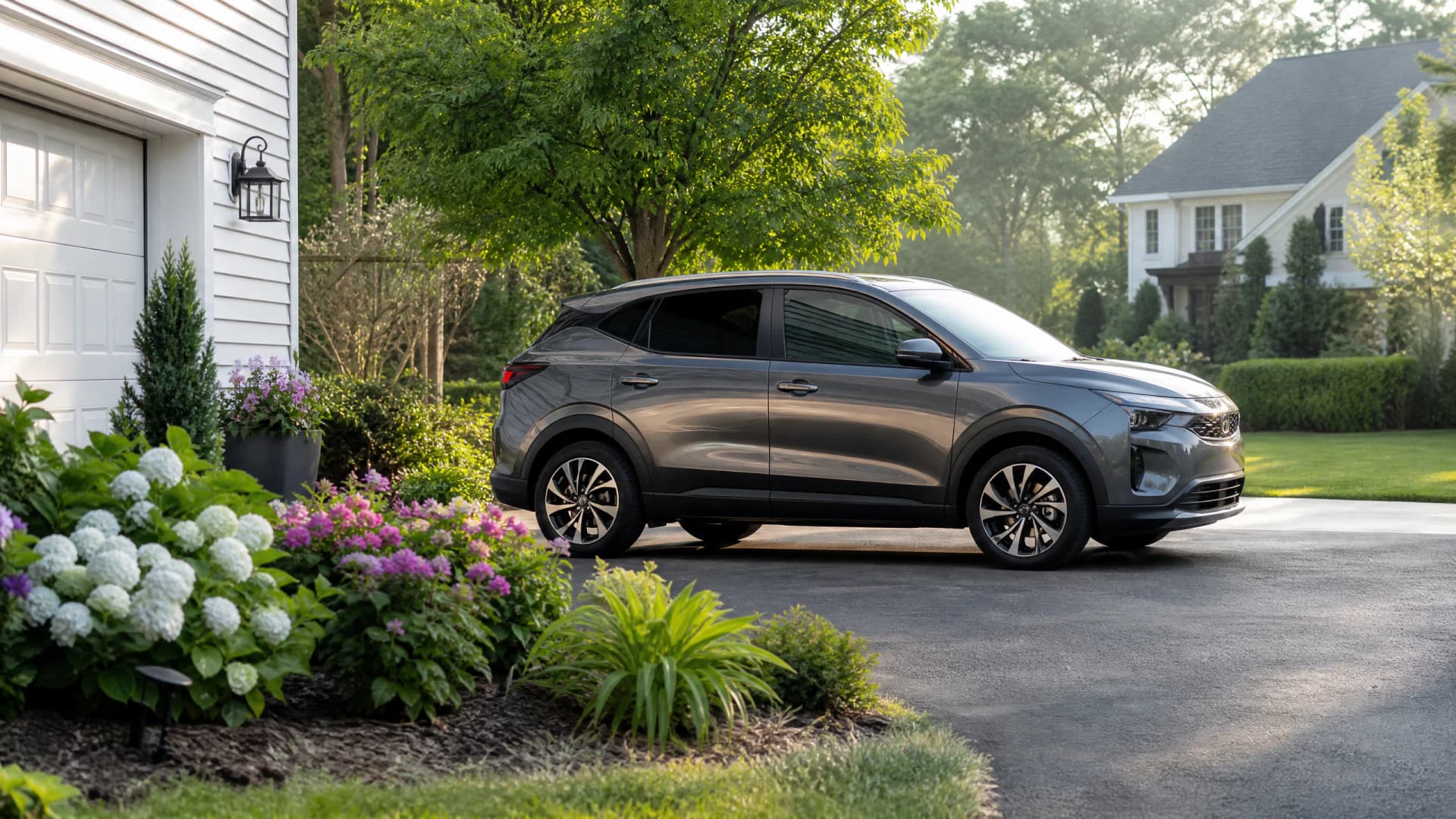
Most carriers will not tell you when collision stops being cost-effective. They'll renew the same coverage year after year until you ask to remove it.







Low Mileage and Usage-Based Programs
You're driving 5,000 to 7,000 miles a year instead of 12,000. That mileage drop should lower your premium, but it won't unless your carrier knows about it and offers a program that rewards low use. Two paths exist: low-mileage discounts based on annual odometer reads, and usage-based programs that monitor actual driving via app or plug-in device.
Progressive offers Snapshot, which tracks mileage, time of day, and hard-braking events. State Farm offers Drive Safe & Save with similar monitoring. GEICO and Allstate offer mileage-based programs in Illinois. Not all carriers writing in the state offer these programs, and enrollment is never automatic. You must ask, enroll, and in some cases install a device or grant app permissions. If your carrier does not offer a low-mileage option and you're driving under 7,000 miles a year, that alone justifies comparing quotes from carriers that do.
Illinois law requires insurers to offer a mature-driver discount. The statute, 215 ILCS 5/143.29, applies to insureds over 55 but does not fix a percentage; each insurer sets the amount in its filed rates. Some carriers apply it automatically at renewal when you age into eligibility. Others require you to request it or submit proof of a state-approved defensive driving course. If your current renewal notice shows no mature-driver discount line item and you're over 55, call your agent and ask whether one applies and what documentation they need.
25
Carriers Writing Auto Policies in Illinois
Twenty-five carriers write standard, preferred, or non-standard auto policies in Illinois. Not all offer mature-driver discounts automatically, and low-mileage program availability varies widely. Comparing three to five carriers that serve retirees well surfaces the discount and mileage-tracking gaps your current insurer may not mention.
Illinois Department of Insurance licensure records

Medical Payments and Medicare Coordination
Medical payments coverage, often called med pay, reimburses medical bills after an accident regardless of fault. It typically covers $1,000 to $5,000 per person and pays before health insurance. If you carry Medicare, med pay coordination depends on your policy's order-of-payment language and whether Medicare is primary or secondary for auto-accident injuries.
Medicare is generally secondary to auto liability and med pay. If another driver causes the accident, their liability coverage pays first, then your med pay if applicable, then Medicare picks up remaining covered expenses. If you cause the accident, your med pay pays first up to its limit, then Medicare. Some retirees drop med pay when they enroll in Medicare, reasoning that Medicare will cover accident injuries. Others keep a small med pay limit as a gap-filler for deductibles and co-pays Medicare does not cover.
The decision hinges on your Medicare supplement plan and your out-of-pocket exposure. If you carry a Medigap plan with low cost-sharing, med pay adds little. If you're on Original Medicare with higher out-of-pocket limits, a $2,000 med pay endorsement running $30 to $60 annually can cover the gap. This is a judgment call, not a mandate, and your current policy may carry med pay you no longer need.
Liability Limits and Retirement Assets
Illinois minimums are $25,000 per person and $50,000 per accident for bodily injury, plus $20,000 for property damage. Those limits protected you when your assets were modest and tied up in a mortgage. Now that you own your home, carry retirement accounts, and live on fixed income, the minimums may expose you to a judgment that exceeds your policy and attaches to your assets.
If you cause an accident that injures someone seriously, their medical bills, lost wages, and pain-and-suffering claims can exceed $50,000. When your liability limit is exhausted, the injured party can sue you personally for the remainder. Illinois law allows wage garnishment and asset attachment to satisfy a civil judgment. Retirees with paid-off homes and retirement savings face more exposure than younger drivers with fewer assets and higher debt ratios.
Raising liability limits from state minimums to $100,000 per person and $300,000 per accident typically adds $80 to $150 annually. Some carriers bundle $100,000/$300,000 liability with $100,000 uninsured motorist at a lower combined premium than buying the coverages separately. Compare your current liability limit against your net worth. If your assets exceed your coverage, the difference is your uninsured exposure. Umbrella policies layer over auto liability and start at $1 million, but they require underlying auto liability at $250,000/$500,000 or higher depending on the carrier.

Compare Carriers That Treat Retirees Well
Your next step is a structured comparison. Pull your current declarations page and identify your liability limits, collision and comprehensive deductibles, and any discount line items. Note your annual mileage estimate and whether your carrier offers a usage-based or low-mileage program. Then request quotes from three to five carriers writing in Illinois that offer mature-driver discounts and mileage-tracking programs.
When you request quotes, state your age, your mileage, that the vehicle is paid off, and ask explicitly whether the carrier offers a mature-driver discount and how it is applied. Ask whether completion of a state-approved defensive driving course increases the discount or is required to qualify. Some carriers apply age-based discounts automatically; others apply course-completion discounts only when you submit a certificate. The difference is procedural, not cosmetic, and determines whether you qualify now or after completing a course.
Include at least one preferred-tier carrier and one standard-tier carrier in your comparison. Preferred-tier carriers such as Auto-Owners and Erie typically require clean records and offer lower base rates but fewer discount levers. Standard-tier carriers such as State Farm and Allstate serve broader risk profiles and often offer more discount categories, including mature-driver and low-mileage, but base rates run higher. The final premium depends on how your profile intersects each carrier's rating algorithm. Comparing across tiers surfaces the structure that fits your position best.
What Changes When You Own the Vehicle
Collision coverage pays to repair or replace your vehicle when you cause the accident or hit an object. Once the car is paid off, you control whether to keep it. Compare annual collision premium times two against your vehicle's current market value. If premiums exceed half the vehicle's worth over a two-year period, collision costs more than the maximum payout you'd receive. A $5,000 vehicle with $700 annual collision premium crosses that line in under four years.
Comprehensive coverage pays for non-collision damage: theft, weather, vandalism, glass, animal strikes. Premiums run lower than collision, often $150 to $300 annually depending on your ZIP code and vehicle. Waukegan sits in Lake County, where winter weather and deer crossings make comprehensive claims more common than in urban Cook County. Many retirees keep comprehensive when they drop collision, treating it as protection against risks they cannot control by driving carefully.
Get Your Free Quote
Get My Illinois Retiree Auto Insurance QuoteFrequently Asked Questions
Does Illinois require full coverage on a paid-off car?
No. Illinois requires liability insurance at state minimums: $25,000 bodily injury per person, $50,000 per accident, and $20,000 property damage. Collision and comprehensive are optional once you own the vehicle outright. Lenders require full coverage to protect their collateral, but the legal requirement ends when the lien releases.
How do I know if my collision premium is worth keeping?
Compare your annual collision premium times two against your vehicle's current market value. If two years of premiums exceed half the vehicle's worth, collision typically costs more than the maximum payout you'd receive after a total loss. A $4,500 car with $650 annual collision premium crosses that threshold in under four years.
Will my carrier automatically apply a mature-driver discount in Illinois?
Not always. Illinois law requires insurers to offer a mature-driver discount to insureds over 55, but the statute does not fix a percentage and does not require automatic application. Some carriers apply it at renewal when you age into eligibility; others require you to request it or submit proof of a state-approved course. Check your renewal notice for a discount line item, and if none appears, ask your agent what applies and what documentation they need.
Do I need medical payments coverage if I have Medicare?
It depends on your Medicare supplement plan and out-of-pocket exposure. Medicare is generally secondary to auto liability and med pay, so med pay pays first up to its limit, then Medicare covers remaining expenses. If you carry a Medigap plan with low cost-sharing, med pay adds little. If you're on Original Medicare with higher deductibles, a small med pay limit can cover gaps Medicare does not.
What liability limits should a retiree carry in Illinois?
State minimums are $25,000 per person and $50,000 per accident. If you own your home and carry retirement savings, those minimums may expose your assets to a judgment exceeding your policy. Raising limits to $100,000 per person and $300,000 per accident typically adds $80 to $150 annually and aligns coverage closer to the asset exposure most retirees face.
Which carriers in Illinois offer low-mileage discounts for retirees?
Progressive, State Farm, GEICO, and Allstate offer mileage-based or usage-based programs in Illinois. Enrollment is never automatic; you must ask, enroll, and in some cases install a device or grant app permissions. If your annual mileage dropped below 7,000 miles and your current carrier does not offer a low-mileage option, compare quotes from carriers that do.