
Cheapest Car Insurance for Retired Widows — Illinois
Free to compare
Why Your Premium Rose After Your Spouse Died
You've been driving for forty years with a clean record. Your spouse passed away six months ago, you removed them from the policy, and your premium increased at the next renewal. Nothing changed about your driving, your vehicle, or your mileage, but the bill went up anyway.
When a household loses a driver, insurers re-rate the policy. Multi-car and multi-driver discounts disappear. Many carriers apply what they call single-driver or household-composition adjustments that treat you as a different risk profile, even when your own record stayed spotless. Illinois law requires insurers to offer a mature-driver discount under 215 ILCS 5/143.29, but that discount is age-based and doesn't compensate for the household-tier penalty. The law mandates the offer, not the amount, and insurers set their own percentage by filing.
“The course-based discount expires after three years, the carrier won't notify you, and you must re-submit manually to keep it active.”

See What Illinois Retirees Pay Now
Get My Illinois Retiree Auto Insurance Quoteover 55
Eligible Age for Illinois Discount
Illinois statute 215 ILCS 5/143.29 requires insurers to offer a discount to drivers over 55, but the percentage is not fixed by law. Each carrier sets the amount by filing, and most apply it only after you ask and submit documentation.
215 ILCS 5/143.29
The Mature-Driver Discount Doesn't Auto-Renew
The discount Illinois law requires exists in two forms. One is purely age-based and applies when you cross the threshold, typically 55 or higher depending on the carrier's filed schedule. The other is course-based: complete a state-approved defensive driving course and the carrier applies a discount tied to that completion certificate.
Here's the blocker widowed drivers hit most often: the course-based discount typically expires after three years. Your certificate lapses, the discount falls off at renewal, and the carrier does not notify you. You submitted it once, the discount appeared for three years, then disappeared. You assume the age-based discount replaced it. It didn't. The age discount is usually smaller, and many carriers require you to re-submit a new course certificate every renewal cycle to keep the larger course-based discount active.
When your spouse died and the household discount disappeared, you lost one layer of rate reduction. If your course certificate expired around the same time, you lost two. The compounding effect looks like a sudden penalty, but it's two unrelated expirations happening in the same window.
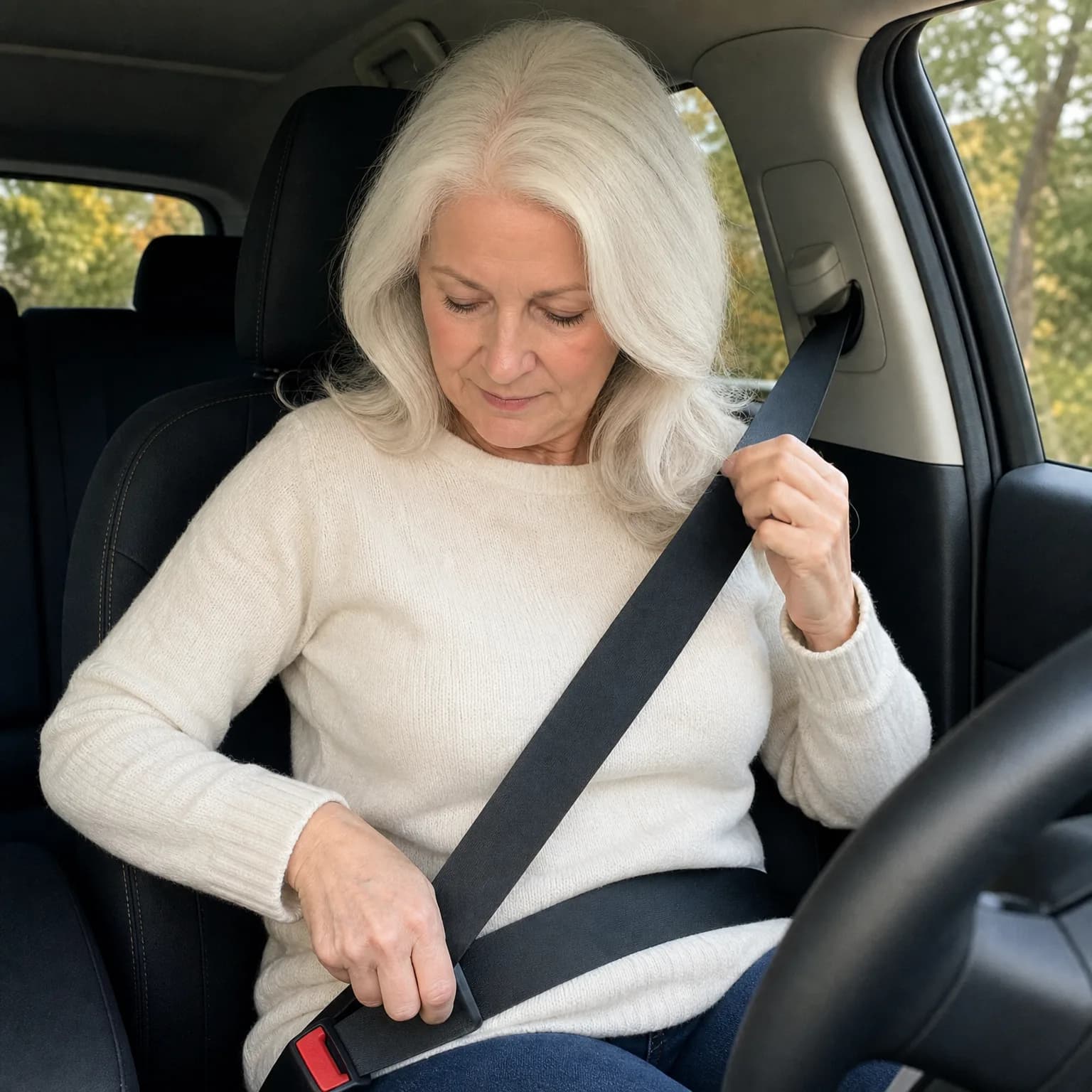
The blocker: your carrier won't tell you the certificate expired, and they won't auto-apply the course discount at renewal even if you qualify. You must submit a new certificate manually.






The Course Provider Must Be Illinois-Approved
Many defensive driving courses market themselves as eligible for insurance discounts nationwide. That's not how state approval works. Illinois maintains a list of approved course providers, and if your certificate comes from a provider not on that list, your carrier will reject it. The course may be legitimate, accredited in another state, and recognized by AARP or AAA, but if Illinois didn't approve it, it doesn't count here.
Verify the provider is on the Illinois Secretary of State approved list before you pay the enrollment fee. Most approved courses cost between $15 and $35 and can be completed online. Some require a single in-person session; others are fully remote. Completion typically takes four to eight hours depending on the format. Once you finish, the provider issues a certificate with your name, completion date, and course ID. Submit that certificate to your carrier at least 30 days before your renewal date.
If you submit it after renewal processes, the discount won't appear until the following year. Carriers do not retroactively adjust premiums mid-term for late-submitted certificates. The timing window matters more than most agents will tell you.
$25,000
Illinois Minimum Bodily Injury per Person
Illinois law requires minimum liability of $25,000 per person, $50,000 per accident, and $20,000 property damage. Retired drivers with home equity or retirement accounts face exposure above these minimums in an at-fault accident. Verify your liability limits against your asset position.
Illinois insurance code, auto_insurance_state_data

Should You Keep Full Coverage on a Paid-Off Car
Your vehicle is twelve years old, paid off, and worth maybe $4,000 in trade-in value according to the last appraisal you saw. You're paying $600 a year for collision and comprehensive with a $500 deductible. A claim pays out vehicle value minus the deductible, so your maximum recovery is $3,500. You'll recover that cost in under six years of collision premiums only if you total the car, and you haven't filed a claim in two decades.
That math gets many widowed retirees to drop collision and comprehensive and keep only liability insurance. The judgment call depends on whether you could replace the vehicle out of pocket if it's totaled. If $4,000 is a manageable one-time expense from savings, dropping collision makes sense. If that $4,000 would strain your budget or force you into financing a replacement, keep the coverage. The premium feels high because it is, relative to the car's value, but it's buying certainty.
Comprehensive coverage protects against theft, weather, and vandalism. Illinois sees winter storm damage and catalytic converter theft in metro counties. If you park outside and your ZIP code shows elevated theft rates, comprehensive may still earn its cost even when collision doesn't. Split the decision: you can drop collision and keep comprehensive independently.
Medical Payments Coverage and Medicare Coordination
You have Medicare Parts A and B. Your auto policy includes medical payments coverage at $5,000. After an accident, which one pays first? Medicare is always secondary to auto insurance when the injury happens in a car. Your MedPay coverage pays first up to the policy limit, then Medicare picks up the remainder. That coordination means MedPay still has value even with Medicare.
The question is whether the premium for that $5,000 MedPay rider justifies the coverage. Many carriers charge $40 to $80 annually for MedPay at that limit. If you're injured as a passenger in someone else's vehicle, their liability policy pays your medical bills, but only if they're at fault and only up to their limits. Your own MedPay covers you regardless of fault and pays immediately without waiting for liability determination. For $60 a year, it closes a gap Medicare doesn't fill: the coordination-of-benefits delay and the fault-dispute window.

Compare Carriers Before Your Renewal Date
The next step is a structured comparison. Pull your current declarations page and note your exact coverage structure: liability limits, deductibles, MedPay or PIP if present, and any add-ons like roadside or rental reimbursement. Request quotes from at least three carriers writing in Illinois with identical coverage. State Farm, Geico, and Progressive all offer online quotes for single-driver households; USAA requires military affiliation but quotes online once eligibility is verified; Erie requires an agent but quotes within 24 hours in most counties.
Ask each carrier three questions directly: what mature-driver discount applies at your age without a course certificate, what additional discount applies with an approved course certificate, and whether that course discount requires annual re-enrollment or renews automatically once verified. The answers vary by carrier filing. Some apply the age discount automatically at 55; others require you to request it. Some accept the course certificate once and renew it indefinitely; others expire it every three years and require resubmission.
The carrier whose rate is lowest today may not stay lowest after the first renewal if their course discount expires and others' don't. Compare the three-year total cost, not just year one. If one carrier charges $40 more annually but doesn't require course re-enrollment, that saves you the re-enrollment fee and the risk of missing the submission window at renewal three.
Which Carriers Writing in Illinois Treat Retired Widows Well
State Farm, USAA, and Erie write preferred-tier business in Illinois and all three maintain online quoting for single-driver households. State Farm files SR-22 when needed and offers mature-driver course discounts; verify your certificate is on the Illinois-approved provider list before submitting. USAA restricts eligibility to military-affiliated families but applies both age-based and course-based discounts without requiring annual re-enrollment once the course is verified. Erie operates through agents and brokers rather than direct online quote paths in most counties, but their underwriting treats long-tenured policyholders favorably when a spouse is removed mid-term.
Geico, Progressive, and Dairyland all write standard and non-standard business in Illinois with online quotes available. Progressive and Geico both offer usage-based programs that can lower premiums for drivers who no longer commute. Dairyland writes non-standard but handles mature-driver profiles without the SR-22 surcharge some non-standard carriers apply across the board. Compare all five on the same coverage structure: identical liability limits, identical deductibles, identical add-ons. The mature-driver and low-mileage programs vary by carrier filing, and the difference between best and worst can exceed the household discount you just lost.
Get Your Free Quote
Get My Illinois Retiree Auto Insurance QuoteFrequently Asked Questions
Does Illinois law require insurers to give senior drivers a discount?
Yes. Illinois statute 215 ILCS 5/143.29 requires insurers to offer a discount to drivers over 55. The law does not fix the discount percentage; each carrier sets the amount by filing. Most carriers apply it only after you request it and submit documentation, such as proof of age or a defensive driving course certificate.
What happens to my car insurance rate when my spouse dies?
When you remove a deceased spouse from your policy, insurers re-rate your coverage. Multi-driver and household discounts disappear, and many carriers apply a single-driver adjustment that increases your premium even when your own driving record hasn't changed. The increase reflects underwriting tier changes, not a penalty for widowhood.
How long does the mature-driver course discount last in Illinois?
Most Illinois carriers expire the course-based discount after three years from the certificate date. The discount does not auto-renew; you must complete a new state-approved course and submit a new certificate to your carrier before renewal to keep it active. Verify your carrier's specific renewal policy, as some require annual re-submission.
Should I drop collision coverage on my paid-off car?
It depends on whether you could replace the vehicle out of pocket if it's totaled. If your car is worth $4,000 and you're paying $600 annually for collision with a $500 deductible, your maximum claim payout is $3,500. If that amount is manageable from savings, dropping collision makes financial sense. If not, keep the coverage for certainty.
Does Medicare cover injuries from a car accident in Illinois?
Medicare is always secondary to auto insurance when the injury happens in a vehicle. Your medical payments coverage pays first up to the policy limit, then Medicare covers the remainder. MedPay fills the coordination-of-benefits gap and pays immediately regardless of fault, which Medicare does not.
Which carriers in Illinois offer the best rates for retired widows?
State Farm, USAA, Erie, Geico, and Progressive all write in Illinois and offer mature-driver discounts. USAA restricts eligibility to military-affiliated families. Erie operates through agents rather than direct online quotes in most counties. Compare quotes with identical coverage across all five, and verify each carrier's mature-driver and low-mileage program terms before committing.