
Full Coverage Retirees with Paid-Off Cars — Cicero
Free to compare
When Full Coverage Costs More Than It Protects
You opened your renewal notice last month and saw the same collision and comprehensive premiums you paid when the car was financed five years ago. The loan released in 2020, you drive 4,000 miles a year now that work is behind you, and the vehicle sits in your Cicero driveway most days. Your carrier never mentioned that you can drop collision or adjust your deductible now that no lender requires coverage, and your premium reflects a commuter profile you left behind at retirement.
This article walks the coverage-fit decision for retirees in Cicero with paid-off vehicles of moderate age. Illinois law requires insurers to offer a mature-driver discount for drivers over 55, but the statute does not fix the percentage—each carrier files its own amount. The larger coverage question is whether collision and comprehensive still earn their annual cost when the asset is yours, lightly driven, and aging toward a total-loss threshold most policies never disclose until the claim closes.
“Carriers never send a letter when the lien releases reminding you that collision is optional now.”

See What Illinois Retirees Pay Now
Get My Illinois Retiree Auto Insurance Quote$25,000
Illinois Bodily Injury Minimum Per Person
Illinois requires $25,000 bodily injury per person, $50,000 per accident, and $20,000 property damage as the liability floor. Retirees with retirement assets often carry higher limits because the minimum exposes personal savings in an at-fault accident.
625 ILCS 5/7-203
The Structural Reality Most Carriers Never Explain
Lenders require collision and comprehensive because the vehicle secures the loan. Once you own the car outright, coverage becomes a choice you control. Carriers do not send a letter when the lien releases reminding you that collision is optional now. The renewal notice regenerates with the same coverage you carried last year, and unless you call to change it, the premium continues.
The coverage-fit question turns on vehicle value and annual collision cost. Collision pays the actual cash value of your car minus your deductible if you cause an accident or hit an object. Comprehensive covers theft, weather, vandalism, and animal strikes. Both coverages pay only up to the vehicle's depreciated market value at the time of loss, not replacement cost.
A 2015 sedan worth $6,000 today depreciates further each year. If collision and comprehensive together cost $800 annually and your deductible is $500, a total loss pays you $5,500. Over two years you paid $1,600 in premiums for coverage that pays $5,500 once. The math tightens as the vehicle ages and the annual premium remains stable or increases.
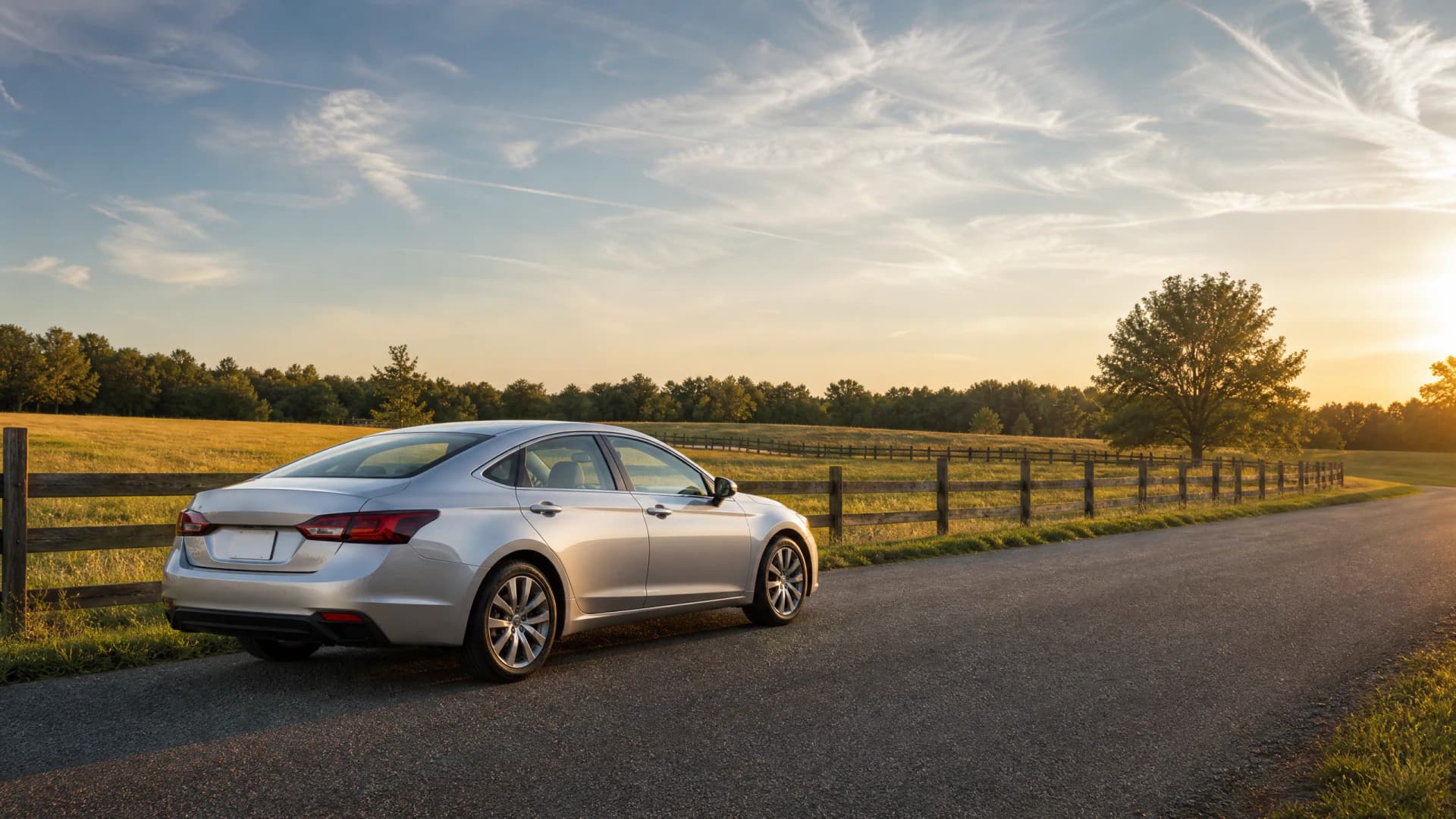
You cannot resolve the full-coverage question without knowing your vehicle's actual cash value today and your annual collision-plus-comprehensive cost. Most retirees lack both numbers when they open the renewal notice.
Related Articles






Illinois Mature-Driver Discount and Low-Mileage Programs
Illinois statute 215 ILCS 5/143.29 requires insurers to offer a mature-driver discount for insureds over 55. The law does not fix the discount percentage; each carrier sets its own amount by filing. You qualify by age alone—no course required for the age-based discount—but the amount varies by insurer and you must ask what yours applies at your next renewal.
Separate from the age-based discount, most Illinois carriers offer a course-based mature-driver discount for completing a state-approved defensive driving course. The course discount typically stacks on top of the age discount, but enrollment and certificate submission are your responsibility. The carrier will not automatically apply it; you submit the certificate to your agent and request the discount at renewal.
Low-mileage and usage-based programs reduce premiums for drivers logging under 7,500 miles annually. Progressive Snapshot, State Farm Drive Safe & Save, and Allstate Milewise operate in Illinois and all three work for retirees who no longer commute. Enrollment requires a telematics device or mobile app that reports mileage. If you drive 4,000 miles a year and your carrier still prices you as a commuter, a usage-based program can lower your liability and remaining physical-damage premiums without dropping coverage.
Carriers writing in Illinois that serve retirees well include State Farm, GEICO, Progressive, Allstate, and Erie. State Farm and Erie both offer mature-driver and low-mileage programs; GEICO and Progressive offer usage-based telematics programs with mileage tracking. Each carrier files its own mature-driver discount percentage; compare what each applies before your renewal date.
required
Illinois Mature-Driver Discount Mandate
Illinois law requires insurers to offer a mature-driver discount for drivers over 55, but the statute does not fix the percentage—the insurer determines the appropriate reduction by filing. Ask your carrier what percentage applies to your policy and whether completing an approved course increases it.
215 ILCS 5/143.29

Medicare and Medical Payments Coverage Coordination
Illinois does not require personal injury protection, but many retirees carry medical payments coverage from their pre-retirement policies. Medical payments coverage pays your medical bills after an accident regardless of fault, up to the policy limit. Medicare is your primary health coverage once you turn 65; med pay becomes secondary.
If you carry a $5,000 med pay limit and Medicare already covers your post-accident treatment, med pay pays only the portion Medicare does not: deductibles, copays, and non-covered services. The question is whether that secondary coverage justifies the annual med pay premium when Medicare handles most treatment costs. Many Cicero retirees drop med pay at 65 and allocate the premium savings to higher liability limits, protecting retirement assets in an at-fault accident where medical payments coverage does not apply to the other driver.
If you keep med pay, verify that your carrier coordinates benefits correctly. Some insurers pay med pay first and subrogate against Medicare later; others pay only after Medicare processes the claim. The coordination method affects how quickly your out-of-pocket costs are reimbursed. Ask your agent which coordination method your policy uses before your next accident, not after.
Liability Limits and Retirement Asset Exposure
Illinois requires $25,000 bodily injury per person, $50,000 per accident, and $20,000 property damage. These minimums were set decades ago and expose retirees with home equity, retirement accounts, or savings to personal liability in an at-fault accident. If you cause an accident that injures another driver and their medical bills and lost wages total $80,000, your $50,000 policy limit pays the first $50,000 and the injured party can pursue your personal assets for the remaining $30,000.
Most financial advisors recommend liability limits of at least $100,000 per person and $300,000 per accident for retirees with assets to protect. The incremental premium for higher limits usually runs lower than the cost of collision coverage on an aging vehicle. If you drop collision to save $600 annually, reallocating $200 of that to increase your liability limits from $50,000/$100,000 to $100,000/$300,000 protects your retirement savings without increasing your total premium.
Umbrella policies offer an additional $1 million in liability coverage for $200 to $400 annually, but umbrella insurers require underlying auto liability limits of at least $250,000/$500,000 before they issue the umbrella. If you carry significant retirement assets and low liability limits, compare the cost of increasing your auto liability limits against the exposure an at-fault accident creates. The collision-coverage question and the liability-limit question are connected: you free premium from one to protect assets with the other.

The Next Step for Cicero Retirees
Call your current carrier this week and ask for three numbers: your vehicle's actual cash value today, your annual collision premium, and your annual comprehensive premium. Add collision and your deductible together, divide by vehicle value, and calculate the percentage. If it exceeds 10 percent, you are paying more for collision than the coverage protects over a reasonable claim cycle. Ask what dropping collision saves annually and whether your mature-driver discount is already applied.
Compare your current carrier's mature-driver and low-mileage discount against State Farm, GEICO, Progressive, Allstate, and Erie quotes for Cicero. Each files its own mature-driver percentage and each prices low-mileage drivers differently. Submit your defensive-driving certificate if you completed an approved course and verify that the discount appears on your next renewal declaration page. Reallocate collision savings to higher liability limits if you carry retirement assets and minimum coverage today. The coverage-fit decision belongs to you now that the lender released the lien; make it with your actual driving profile and asset exposure in mind, not the commuter profile you left behind.
The Break-Even Threshold for Collision Coverage
Run the arithmetic for your renewal. Add your annual collision premium to your collision deductible. Divide that sum by your vehicle's current market value. If the result exceeds 10 percent, collision coverage costs more than it protects over a reasonable claim cycle. A $6,000 vehicle with $600 annual collision premium and a $500 deductible yields 18 percent—well past the threshold where most financial planners suggest dropping the coverage.
The same threshold applies to comprehensive, though comprehensive premiums usually run lower than collision. Many Cicero retirees keep comprehensive and drop collision, preserving theft and weather protection while eliminating the higher-cost accident coverage. Your vehicle value today determines the math; ask your carrier for the actual cash value figure they would pay in a total loss, not the trade-in estimate or the price you paid five years ago.
Get Your Free Quote
Get My Illinois Retiree Auto Insurance QuoteFrequently Asked Questions
Does Illinois require collision coverage on a paid-off car?
No. Illinois requires liability coverage only: $25,000 bodily injury per person, $50,000 per accident, and $20,000 property damage. Collision and comprehensive are optional once no lender holds a lien on your vehicle. Your carrier will continue billing for both unless you call to remove them.
How much does the Illinois mature-driver discount reduce my premium?
Illinois statute 215 ILCS 5/143.29 requires insurers to offer a mature-driver discount for drivers over 55, but the law does not fix the percentage—each insurer determines the amount by filing. Ask your carrier what discount percentage applies to your policy and whether completing a state-approved course increases it.
Can I keep comprehensive and drop collision on my paid-off car?
Yes. Many retirees keep comprehensive to cover theft, weather, and vandalism while dropping the higher-cost collision coverage. Comprehensive premiums usually run lower than collision, and the coverage protects against risks that do not depend on your driving. Ask your carrier what each coverage costs separately before deciding.
Do usage-based programs work for retirees who drive under 5,000 miles a year?
Yes. Progressive Snapshot, State Farm Drive Safe & Save, and Allstate Milewise all operate in Illinois and reduce premiums for low-mileage drivers. Enrollment requires a telematics device or mobile app that reports your actual mileage. If your carrier still prices you as a commuter, a usage-based program can lower your premium without dropping coverage.
Should I carry medical payments coverage if I have Medicare?
Medicare is your primary coverage after 65; medical payments coverage becomes secondary. Med pay pays only the portion Medicare does not cover: deductibles, copays, and non-covered services. Many retirees drop med pay and reallocate the premium to higher liability limits, protecting retirement assets in an at-fault accident.
What liability limits should retirees carry in Illinois?
Illinois requires $25,000 per person and $50,000 per accident, but these minimums expose retirees with home equity or retirement savings to personal liability in an at-fault accident. Most financial advisors recommend at least $100,000 per person and $300,000 per accident for retirees with assets to protect.