
Retiree Auto Insurance After Dropping a Second Car — Evanston, IL
Free to compare
You Dropped the Second Car and Your Premium Stayed High
You sold the second car or let its policy lapse, expecting your premium to drop by half or close to it. Instead, your six-month renewal notice arrived with a rate barely changed, or even higher than before. You call the agent, who explains that multi-car discount removal offset the reduction from dropping coverage on the second vehicle. The math feels wrong, and it often is: the real issue is that your carrier never applied the mature-driver discount Illinois law requires, because you never submitted documentation proving you qualify.
Illinois statute 215 ILCS 5/143.29 mandates that insurers offer a discount to policyholders over 55. The law does not fix the percentage: each carrier files its own amount with the state Department of Insurance, and most set it between 5% and 15%. The critical gap is that the discount is never automatic. You must prove eligibility by completing a state-approved defensive driving course or, for some carriers, simply reaching the age threshold and requesting the discount in writing. Most retirees never knew to ask, so they kept paying the higher rate through every renewal.
“The mature-driver discount is mandated by Illinois law, but carriers set the percentage and never apply it unless you prove eligibility every renewal.”

See What Illinois Retirees Pay Now
Get My Illinois Retiree Auto Insurance Quoteage 55
Illinois Mature-Driver Discount Threshold
215 ILCS 5/143.29 requires insurers to offer a mature-driver discount to policyholders over 55. The statute does not fix the percentage: each carrier files its own with the state, typically 5-15%, and you must prove eligibility at each renewal.
215 ILCS 5/143.29 (insureds over 55; insurer determines appropriate reduction)
The Multi-Car Discount Masked the Missing Mature-Driver Discount
When you carried two vehicles on the same policy, the multi-car discount reduced your premium by 15-25% depending on the carrier. That discount vanished the moment you dropped the second car, exposing the base rate you were paying all along. Most retirees assume the base rate already reflects their clean record and decades behind the wheel. It does not. The mature-driver discount is a separate line item, applied only after you submit proof of eligibility, and it never appears on your policy declarations page unless you qualified for it explicitly.
Here is the structural problem: carriers calculate your premium using your age bracket, your claims history, and your vehicle profile. Age over 55 is an actuarial input, but the mature-driver discount is a regulatory credit that requires action on your part. The two are not the same. You can be 68 with a clean record and still pay the non-discounted rate if you never completed the course or requested the age-based discount your carrier offers. Dropping the second car made this gap visible for the first time.
The multi-car discount also obscured whether your mileage profile was accurate. Most retirees report annual mileage estimates set decades ago when they commuted daily. Your carrier never asked you to update it, so the policy still prices you as a 12,000-mile-per-year driver when your odometer barely moves 4,000 miles annually now. Low-mileage and usage-based programs exist at most carriers writing in Illinois, but enrollment is always opt-in. Your agent will not call you to suggest it.
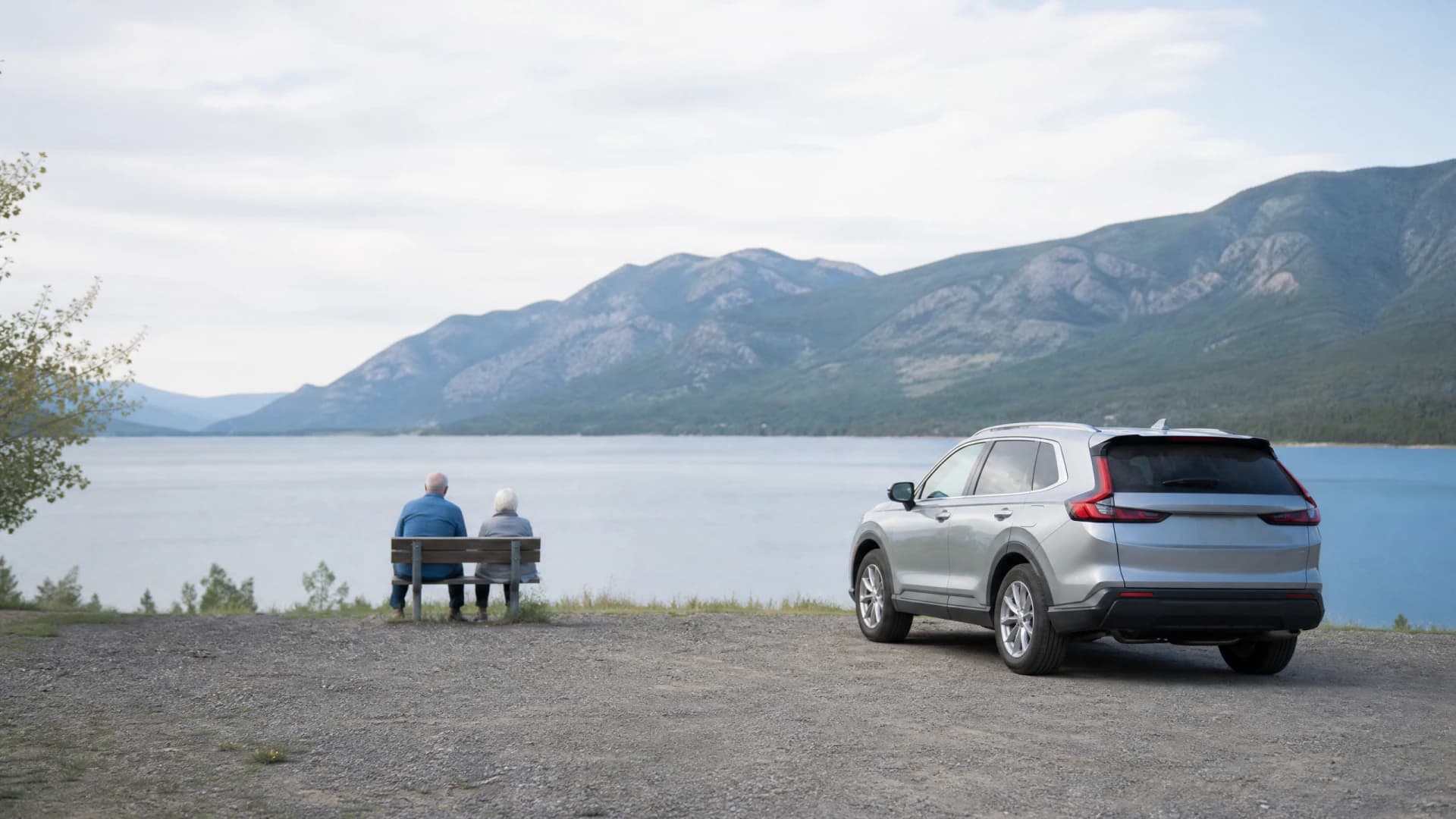
The mature-driver discount is not automatic: carriers require proof of eligibility at every renewal, and most retirees never knew to submit it.







Low-Mileage and Usage-Based Programs for Evanston Retirees
Evanston sits at the northern edge of the Chicago metro, with dense residential neighborhoods, walkable commercial districts, and strong public transit access via the CTA Purple Line and Metra Union Pacific North. Most retirees here drive far less than they did during their working years. The commute is gone, errands consolidate, and winter weather keeps the car parked for stretches. If your annual mileage dropped below 7,500 miles, low-mileage programs can reduce your premium by 10-20%, but only if you enroll.
Low-mileage programs require you to report your odometer reading at renewal or mid-term. Some carriers verify mileage through photos you upload via their app; others require an in-person inspection once per year. Usage-based programs go further: a plug-in device or smartphone app tracks your actual miles driven, time of day, and braking patterns. Retirees who avoid rush-hour driving and rarely drive after dark often see the largest reductions. Progressive Snapshot, State Farm Drive Safe & Save, Allstate Drivewise, and Nationwide SmartRide all operate in Illinois and accept enrollment online.
The enrollment decision sits squarely with you. Your agent will not call to suggest it, and most carriers bury the option in their website's discount page. The programs are opt-in by design: carriers benefit when high-mileage drivers never update their profile. If you are driving under 7,500 miles annually and your policy still prices you as a commuter, you are subsidizing someone else's risk. Enroll in the low-mileage program and submit documentation proving your current mileage. The reduction applies at the next renewal.
One failure mode competing pages omit: carriers often cap low-mileage discounts at a percentage ceiling even when your actual mileage qualifies you for more. If the cap is 15% and you drive 3,000 miles annually, you will never see a reduction beyond that ceiling no matter how low your mileage goes. Ask your carrier what the cap is before enrolling. If the cap is too low and your mileage is very low, switching to a carrier with a higher cap or usage-based pricing may save more than staying with your current insurer and enrolling in their program.
$25,000
Illinois Minimum Bodily Injury Per Person
Illinois requires $25,000 per person, $50,000 per accident bodily injury liability, and $20,000 property damage. Retirees with retirement assets often carry higher limits to protect equity in case of an at-fault accident.
Illinois auto insurance state minimum liability requirements
Whether to Keep Collision Coverage on a Paid-Off Vehicle
Most retirees in Evanston drive a paid-off vehicle of moderate age: a 2015-2020 sedan or crossover with 60,000-100,000 miles, worth $8,000-$15,000 in today's market. You are weighing whether collision and comprehensive coverage still earn their cost now that the lender no longer requires them. The conventional threshold is this: when your annual collision and comprehensive premium exceeds 10% of the vehicle's current value, the coverage may no longer be worth carrying. If your car is worth $10,000 and you are paying $1,200 annually for full coverage, you are at the threshold. A single claim with a $500 or $1,000 deductible nets you far less than you paid in premiums over the life of the policy.
Comprehensive coverage pays for theft, vandalism, weather damage, and hitting an animal. Evanston's vehicle theft rate runs above the Illinois state average due to proximity to Chicago and the density of street parking in older neighborhoods near the lakefront and downtown. If you park on the street overnight or in an uncovered lot, comprehensive coverage may still justify its cost. Collision coverage pays for damage when you hit another vehicle or object, or when another driver hits you and has no insurance or insufficient limits. Illinois requires uninsured motorist coverage, which covers your injuries when hit by an uninsured driver, but it does not cover your vehicle damage. Collision does.
Compare Carriers That Handle Retiree Profiles Well in Illinois
State Farm, Allstate, Country Financial, and Auto-Owners all write standard and preferred-tier policies in Illinois and offer mature-driver discounts. State Farm and Allstate operate online quote tools and allow enrollment in usage-based programs through their apps. Auto-Owners requires you to work through an independent agent but often offers competitive rates for retirees with clean records and low mileage. Country Financial serves Illinois extensively and offers both age-based and course-based mature-driver discounts; confirm with your agent which pathway applies and what documentation they require at renewal.
USAA writes in Illinois and offers mature-driver and low-mileage discounts, but eligibility is restricted to military members, veterans, and their families. Erie writes preferred-tier policies in Illinois and allows online quotes in some counties; confirm availability for Evanston. Nationwide and Travelers both operate statewide and offer usage-based programs; enrollment requires a smartphone app or plug-in device. Progressive writes standard and non-standard policies and offers Snapshot, its usage-based program, to all Illinois drivers. If your current carrier applies a multi-car discount removal that exceeds the mature-driver discount you qualify for, request quotes from at least three carriers and compare the final premium after all applicable discounts.
When comparing carriers, ask each one three questions: what is the mature-driver discount percentage your filing sets, what documentation do you require at each renewal to maintain it, and what is the cap on your low-mileage or usage-based discount. Carriers will quote you their base rate and list available discounts, but they rarely volunteer the cap or the renewal documentation requirement unless you ask directly. The mature-driver discount is mandated by Illinois law, but the percentage and the procedural burden are not. A carrier offering 15% with minimal documentation beats a carrier offering 10% that requires re-certification every year.
How to Qualify for the Mature-Driver Discount in Illinois
Age-based eligibility means the carrier applies the discount automatically once you reach the threshold, typically 55 or older, as long as you request it in writing or confirm it at renewal. Some carriers require no documentation beyond your driver's license showing your birthdate. Others require you to sign an attestation form each renewal cycle. Call your carrier and ask whether their mature-driver discount is age-based and what documentation they require. Do not assume it applies simply because you are over 55: most carriers never apply it unless you ask.
Course-based eligibility requires completing a state-approved defensive driving course. Illinois approves courses offered by AARP, AAA, and other providers; the course typically runs 4-8 hours online or in person. Once completed, the provider issues a certificate. You submit that certificate to your carrier, which then applies the discount for the next renewal period. The discount expires when the certificate expires, usually after three years. Most carriers do not remind you when expiration approaches, so you must re-enroll and re-submit to maintain the discount. Failure to do so means the discount vanishes at renewal and you resume paying the higher rate.
Get Your Free Quote
Get My Illinois Retiree Auto Insurance QuoteFrequently Asked Questions
Does Illinois require car insurance companies to offer a senior discount?
Yes. Illinois statute 215 ILCS 5/143.29 requires insurers to offer a mature-driver discount to policyholders over 55. The law does not fix the percentage: each carrier files its own amount with the state Department of Insurance, typically 5-15%. You must prove eligibility by completing a state-approved defensive driving course or requesting the age-based discount in writing; it is never automatic.
What happens to my car insurance rate when I drop a second car in Illinois?
Dropping the second car removes the multi-car discount, which typically reduces your premium by 15-25%. The base rate for the remaining vehicle is then exposed. If you never applied for the mature-driver discount Illinois law requires, your rate may stay high or even increase despite carrying one fewer vehicle. Request the mature-driver discount and verify your mileage profile is accurate to see the reduction.
How do I prove eligibility for the mature-driver discount in Illinois?
Eligibility pathways vary by carrier. Some apply the discount automatically once you reach age 55 and request it in writing. Others require you to complete a state-approved defensive driving course offered by AARP, AAA, or other providers, then submit the certificate at each renewal. The discount expires when the certificate expires, usually after three years, and you must re-enroll to maintain it.
Should I keep collision coverage on a paid-off car in Evanston?
The conventional threshold is this: when your annual collision and comprehensive premium exceeds 10% of the vehicle's current value, the coverage may no longer be worth carrying. Evanston's vehicle theft rate runs above the Illinois state average, so comprehensive may still justify its cost if you park on the street. Collision covers damage when you hit another vehicle or object, or when an uninsured driver hits you.
Which Illinois carriers offer the best mature-driver discounts for retirees?
State Farm, Allstate, Country Financial, Auto-Owners, Erie, Nationwide, Travelers, and Progressive all write in Illinois and offer mature-driver discounts. The percentage varies by carrier filing: ask each carrier what their mature-driver discount percentage is, what documentation they require at renewal, and what the cap is on low-mileage or usage-based programs. Compare final premiums after all applicable discounts.
Do low-mileage programs work for retirees who drive under 5,000 miles per year?
Yes, but only if you enroll. Low-mileage programs require you to report your odometer reading at renewal; some carriers verify mileage through photos you upload. Retirees driving under 7,500 miles annually often see 10-20% reductions, but carriers cap the discount at a percentage ceiling. Ask your carrier what the cap is before enrolling; if it is too low, switching to a carrier with usage-based pricing may save more.