
Best Car Insurance for Retirees — Champaign
Free to compare
Why Your Premium Didn't Drop When Your Mileage Did
Your renewal notice arrived last month showing another increase. You haven't had a ticket in twenty years, you sold the second car when your spouse passed, and you drive maybe 4,000 miles annually now that work commutes are behind you. The rate should have dropped, not climbed. What your carrier didn't tell you: Illinois law requires them to offer a mature-driver discount, but the application isn't automatic. If you never asked, you've been paying the higher rate every renewal cycle since you turned 55.
This article walks Champaign retirees through the carriers writing in Illinois that handle senior profiles well, how to claim the discount state law guarantees, and whether the full-coverage decision still makes sense when you own a 2015 sedan outright and put 300 miles on it monthly. The comparison framework is specific to the fixed-income, low-mileage, paid-off-vehicle position most Champaign retirees occupy.
“The statute requires the discount exist, not that the carrier apply it unprompted.”

See What Illinois Retirees Pay Now
Get My Illinois Retiree Auto Insurance Quote55
Age Illinois Discount Begins
Under 215 ILCS 5/143.29, Illinois insurers must offer a mature-driver discount to policyholders over 55. The statute does not fix the percentage; each carrier sets the amount by filing, so the discount you receive varies by insurer.
215 ILCS 5/143.29 (insureds over 55; insurer determines appropriate reduction)
What the State Mandate Actually Guarantees
Illinois is one of the states that requires insurers to offer a mature-driver discount, not merely permits them to. The legal basis is 215 ILCS 5/143.29, covering insureds over 55. The statute uses the phrase "appropriate reduction" and leaves the percentage to insurer discretion. That structure means two things for you: first, every carrier writing auto insurance in Illinois must have a discount on file for your age bracket. Second, the size of that discount varies by carrier, sometimes significantly.
The discount is typically age-based, meaning you qualify by turning 55 and do not need to complete a course to access the base version. Many carriers offer an additional discount layer when you complete a state-approved defensive driving course. That second layer stacks on top of the age-based one, but again, the percentage is carrier-specific. The course requirement is not universal; some carriers apply the full discount purely by age.
Here's the structural trap: the statute requires the discount exist, not that the carrier apply it unprompted. Most insurers require you to request it, submit proof of age or course completion, and renew before the discount appears. If your agent never mentioned it and you never asked, you've been paying the undiscounted rate for years. That's not a carrier error under Illinois law; it's how the system works.
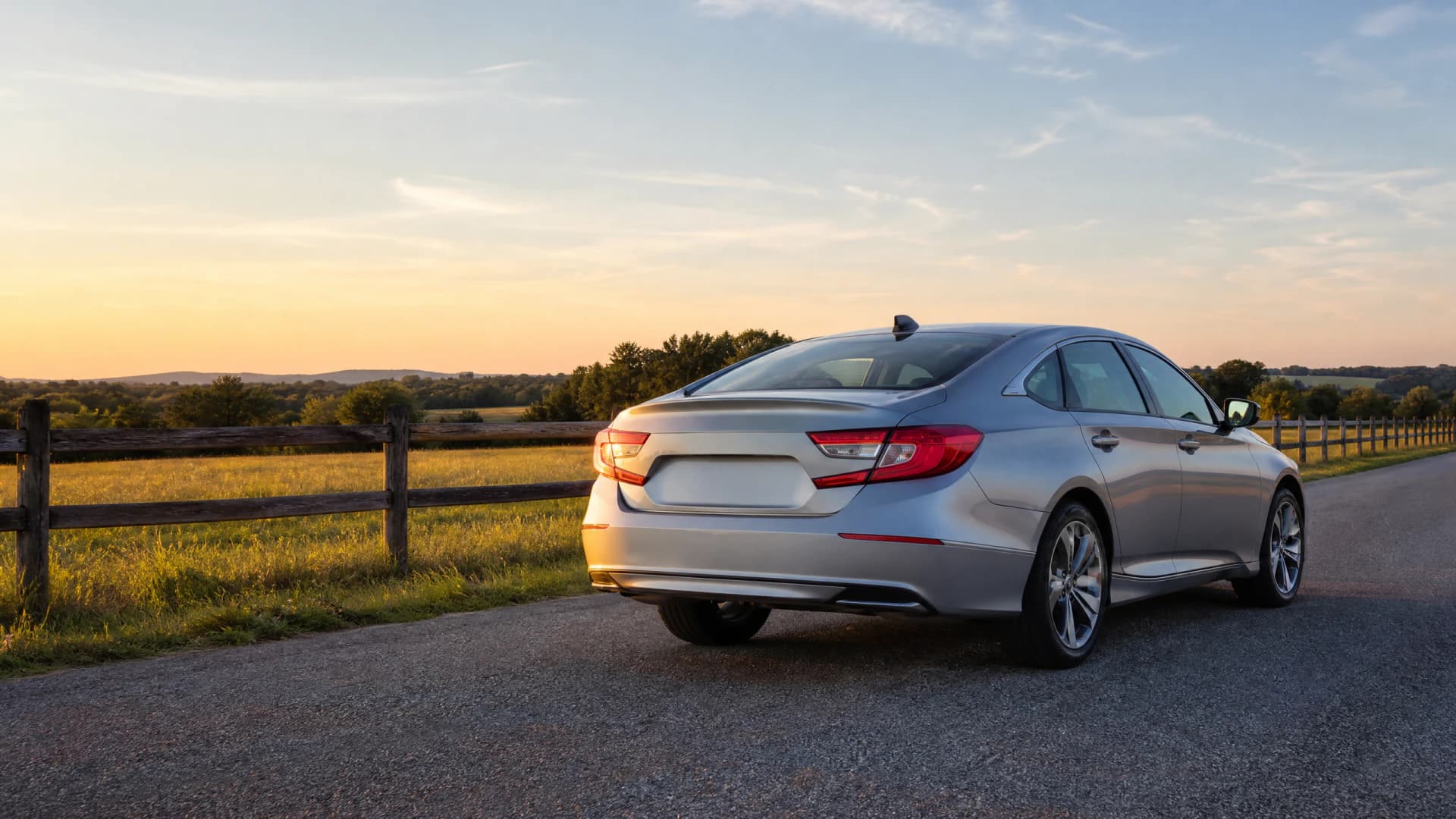
The discount exists by law, but claiming it is on you. Carriers do not scan your policy at 55 and auto-apply the reduction; you request it at renewal time.







How to Claim the Discount You Already Qualify For
Call your current carrier or log into your online account. Ask whether a mature-driver discount is applied to your policy. If it's not, ask what documentation they need to add it. Most carriers require proof of age, typically a driver's license photocopy, and process the change at your next renewal. Some apply it mid-term; most do not, so expect the discount to appear when your policy renews, not immediately.
If your carrier offers a course-completion discount on top of the age-based one, ask which course providers are on their approved list. Illinois does not maintain a single statewide approved-provider list; each carrier files its own. AARP and the National Safety Council both offer defensive driving courses accepted by most Illinois insurers, but verify with your carrier before enrolling. Completing a course your carrier doesn't recognize wastes the enrollment effort.
When you receive the revised renewal notice showing the discount, check the percentage. If it's smaller than you expected or you've seen neighbors mention larger reductions with other carriers, that's the signal to get comparison quotes. The statutory mandate guarantees the discount exists; it does not standardize the amount. Carrier A might apply 8 percent; Carrier B might apply 15 percent for the same age and course completion. The only way to know is to quote both.
25
Carriers Writing in Illinois
Twenty-five carriers are licensed to write auto insurance in Illinois, spanning preferred, standard, and non-standard tiers. That competitive depth gives Champaign retirees leverage to compare mature-driver discount structures, low-mileage programs, and liability-fit options across multiple quotes.
Illinois Department of Insurance carrier licensing data

Does Full Coverage Still Earn Its Cost
You own a 2015 Camry outright. It's worth approximately $8,000 in private-party condition. You're paying collision and comprehensive premiums that together run $600 annually. Over three years, you'll pay $1,800 in premiums to insure an asset worth $8,000 today and depreciating steadily. If you file a total-loss claim tomorrow, the payout is current market value minus your deductible, likely $7,200 if your deductible is $500. That's the math that makes the full-coverage question a genuine judgment call for most Champaign retirees.
Conventional guidance suggests dropping collision and comprehensive when the vehicle's value falls below ten times the annual premium for those coverages. By that measure, if collision and comp together cost you $600 yearly, consider dropping them when the vehicle's value dips below $6,000. You're close to that threshold now. The decision turns on whether you could replace the vehicle out-of-pocket if it were totaled and whether the premium savings reinvested over two years would cover most of a replacement.
Liability coverage is a separate question. Illinois requires $25,000 per person and $50,000 per accident in bodily injury liability, plus $20,000 in property damage. Those minimums protect the other driver, not your car. If you own a home, have retirement accounts, or carry other assets an at-fault accident could expose, your liability limits should exceed the state floor. Many Champaign retirees carry $100,000 per person and $300,000 per accident, sometimes paired with a personal umbrella policy. That's not because you're a risky driver; it's because you have decades of accumulated assets a lawsuit could reach.
Medical Payments Coverage and Medicare Coordination
Illinois does not require personal injury protection, so med-pay is the optional coverage that pays your medical bills after an accident regardless of fault. Medicare is primary for retirees over 65, meaning it pays first when you're injured. Med-pay, if you carry it, pays secondary: it covers your Medicare deductibles, copays, and any expenses Medicare doesn't reimburse.
Most Champaign retirees carry $1,000 to $5,000 in med-pay coverage. The premium is low, typically under $50 annually for $2,000 in coverage, and it functions as a gap filler between what Medicare pays and what you'd otherwise pay out-of-pocket. If you're on a Medicare Advantage plan with higher out-of-pocket maximums, med-pay becomes more valuable. If you carry a Medicare supplement plan that already covers most gaps, med-pay may be redundant.

The Next Step That Actually Lowers Your Bill
Call your current carrier today and ask two questions: is the mature-driver discount applied to your policy, and do they offer a low-mileage or usage-based program. If the answer to either is no, request quotes from at least two other carriers writing in Champaign. State Farm, GEICO, and Progressive all offer online quoting and support the Illinois mature-driver discount; Auto-Owners and Erie require an agent but handle senior profiles well. Compare the discount percentages, the low-mileage program structures, and the liability limits each carrier quotes. The premium you're paying now reflects assumptions that no longer match your driving reality. Fixing that starts with a comparison quote that prices what you actually do.
Which Carriers Write in Champaign and Handle Senior Profiles
State Farm, GEICO, Progressive, and Allstate dominate the Champaign market and all offer online quotes. State Farm and GEICO are preferred-tier carriers, meaning they write standard and better-risk profiles; both support the Illinois mature-driver discount and have low-mileage or usage-based programs you can layer on top. Progressive writes across standard and non-standard tiers and offers Snapshot, a telematics option that tracks actual mileage. Allstate's Drivewise works similarly. These programs matter to retirees because they price the 4,000 miles you actually drive, not the 12,000-mile commuter assumption baked into standard rates.
If your current carrier doesn't offer a low-mileage program or won't quote you competitively after a recent rate increase, carriers like Nationwide, Travelers, and Liberty Mutual also write in Illinois and offer online quoting. Auto-Owners and Erie are preferred-tier carriers available through independent agents; both have strong reputations with senior drivers, though neither offers direct online quoting. For drivers with a DUI or lapse on record, Dairyland, The General, and GAINSCO write non-standard policies in Illinois and support SR-22 filings, though that profile is less common among retirees shopping for rate relief.
Get Your Free Quote
Get My Illinois Retiree Auto Insurance QuoteFrequently Asked Questions
Do I need to take a course to get the Illinois mature-driver discount?
No. Illinois law requires insurers to offer a mature-driver discount starting at age 55 based on age alone. Many carriers offer an additional discount if you complete a state-approved defensive driving course, but the base discount does not require course completion. Ask your carrier which structure they use.
How much does the Illinois mature-driver discount reduce my premium?
The percentage varies by carrier. Illinois statute 215 ILCS 5/143.29 requires insurers to offer the discount but does not fix the amount; each carrier sets the percentage by filing. One carrier might apply 8 percent; another might apply 15 percent for the same age and profile. Compare quotes to see the actual dollar difference.
Will my carrier automatically apply the mature-driver discount when I turn 55?
No. Most carriers require you to request the discount and provide proof of age, typically a driver's license copy. The discount usually applies at your next renewal after you submit documentation, not mid-term. If you never asked, you've been paying the undiscounted rate.
Should I drop collision coverage on a paid-off car?
When your vehicle's value falls below ten times the annual collision and comprehensive premium, dropping those coverages becomes a reasonable option. For a car worth $8,000 with $600 annual collision and comp premiums, you're near that threshold. The decision depends on whether you could replace the vehicle out-of-pocket if totaled.
Does med-pay coverage duplicate Medicare for retirees?
No. Medicare pays primary; med-pay pays secondary, covering your deductibles, copays, and expenses Medicare doesn't reimburse. For retirees on Medicare Advantage with higher out-of-pocket limits, med-pay functions as a useful gap filler. If you carry a Medicare supplement plan, med-pay may be redundant.
Which Champaign carriers offer low-mileage discounts for retirees?
State Farm, GEICO, Progressive, and Allstate all offer usage-based or low-mileage programs in Illinois. Progressive's Snapshot and Allstate's Drivewise track actual mileage and adjust your rate accordingly. These programs benefit retirees driving under 5,000 miles annually, replacing the commuter-era mileage assumption with your actual usage.